
USB-C Right Angle Cable – 6 Great Advantages


Key Takeaways
- A USB-C right-angle cable provides an angled connector that can simplify cable routing.
- Right-angle USB-C cables are useful in tight spaces, desks, wall-mounted equipment, gaming setups, and portable devices.
- The connector angle does not determine USB data speed or charging capability.
- Always check the required USB specification and data-transfer rate.
- Verify charging and power requirements before selecting a cable.
- USB-C video support depends on the specific cable, device, and supported technology.
- Choose the correct right-angle orientation based on how the cable needs to route from the device.
- Cable length and flexibility are important for installation and cable management.
- A USB-C connector that physically fits does not necessarily mean every cable function will work.
- Always match the cable's specifications to the requirements of the connected equipment.
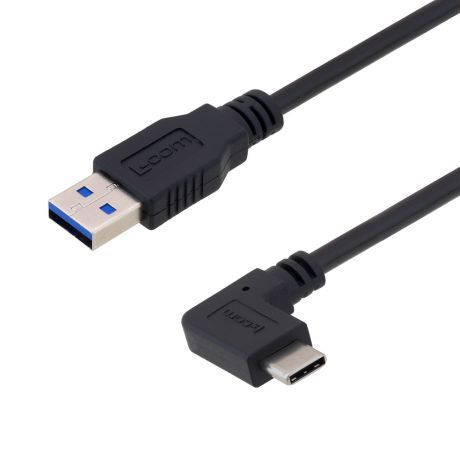
USB-C right angle cables have become increasingly popular in recent years due to their numerous advantages over traditional straight cables. These cables (sometimes called USB 3.1), which feature a 90-degree bend at one end, offer a range of benefits that make them a preferred choice for many users. Whether you're a tech enthusiast or simply someone who wants a more convenient charging and data transfer experience, here are some advantages of a USB-C right angle cable:
- Space-saving design: One of the main advantages of Universal Serial Bus C right angle cables is their space-saving design. The 90-degree bend allows the cable to lay flat against the device, minimizing the amount of space required. This is particularly useful when using devices in tight spaces or when there are multiple cables connected to a single device.
- Prevents cable strain: Traditional straight cables often experience strain and bending when connected to devices, which can lead to fraying and breakage over time. A USB-C right angle cable helps to alleviate this issue by directing the cable away from the device, reducing the risk of strain and damage. This ensures a longer lifespan for your cable and saves you the need to constantly replace it.
- Improved ergonomics: The right-angle design of USB-C cables makes them more ergonomic to use. When charging or transferring data, the cable doesn't stick out from the device, causing less obstruction and reducing the risk of accidental disconnections. This is particularly beneficial when using devices while they are charging, such as smartphones or tablets.
- Versatile usage: USB-C angled cables are versatile and can be used with a wide range of devices, including the new iPhone 15, Android devices, tablets, laptops, gaming consoles, and more. Their compatibility with various devices makes them a convenient option for users with multiple gadgets, eliminating the need to carry multiple cables for different devices.
- Faster data transfer and charging speeds: A USB-C right angle cable is designed to support higher data transfer and charging speeds compared to traditional cables. With the ability to transfer data at speeds of up to 10 Gbps and support fast charging technologies, these cables ensure a more efficient and time-saving experience, allowing you to quickly transfer files or charge your devices.
- Durable and reliable: right angle USB-C cables are built to be durable and reliable. They are often made with high-quality materials and undergo rigorous testing to ensure their longevity. With reinforced connectors and cables, these cables are less prone to wear and tear, making them a reliable choice for daily use.
Benefits of USB-C Right-Angle Cables
1. Better Cable Routing
The angled connector can allow the cable to route more naturally along the side or edge of a device instead of extending straight outward.
2. Saves Space
A right-angle connector can reduce the clearance required around the USB-C port, making it useful in compact installations.
3. Reduces Connector Stress
Routing the cable directly away from the port can sometimes place unnecessary leverage on the connector. An angled design can help keep the cable closer to the device, although proper cable management is still important.
4. Cleaner Cable Management
Right-angle cables can make cable routing more organised around desks, racks, gaming setups, and other equipment installations.
5. Useful for Wall-Mounted Equipment
When equipment is installed close to a wall or panel, a straight USB-C connector may require additional clearance. A right-angle cable can help in these situations.
6. Useful for Portable Devices
Right-angle cables can be convenient for smartphones, tablets, laptops, gaming devices, and other portable equipment where the cable needs to remain close to the device.
In summary, a USB-C right angle cable offers numerous advantages over a traditional straight USB-C cable, including its space-saving design, prevention of cable strain, improved ergonomics, versatile usage, faster data transfer and charging speeds, as well as durability and reliability. If you're looking for a more convenient and efficient charging and data transfer experience, consider investing in a right-angle USB-C cable.
ShowMeCables offers a wide range of angled USB cables specifically designed for tight angle and confined space applications, making it easy to connect a wide range of devices. With our high-quality USB cables, you can enjoy seamless data transfer and fast charging without the hassle. Trust ShowMeCables to provide the perfect USB cables for your unique connectivity needs.
FAQs – Frequently asked questions
What is a USB-C right-angle cable?
A USB-C right-angle cable has a USB Type-C connector that exits the connector housing at an angle, making it useful for compact installations and applications where cable routing space is limited.
What is the benefit of a right-angle USB-C cable?
The primary benefit is easier cable routing and reduced clearance around the USB-C port. It can be particularly useful when a device is positioned close to a wall, desk, panel, or other equipment.
Are right-angle USB-C cables better than straight cables?
Neither is universally better. A right-angle cable can be more convenient where space or cable routing is a concern, while a straight cable may be preferable for general-purpose applications.
Does a right-angle USB-C cable charge faster?
Not necessarily. Charging speed depends on the cable's electrical specifications and the capabilities of the charger and device, not simply on whether the connector is straight or angled.